Until the Roots Are Pulled Up. Pt. I: Washington, D.C.



White supremacy, whitesplaining, white fragility, colorism and tribalism will disappear only when the reasons for their existence in the first place disappear.
The words I wrote did not come out of a textbook. They came out of my life, out of research, reflection, and experience. When I look back at my sixty-nine years, I see a long line of dots connecting my experiences in the ghettos of Washington, D.C., to the stages and classrooms of Germany. I have spent forty-eight years living in Europe, navigating a world that often looks at me but does not truly see me. What I am saying now comes from the life I have lived and the patterns I have watched repeat themselves for decades.
My education started early, and it began inside a divided reality. In the sixties and seventies, I spent years moving between Junior Village, a children’s institution, and the instability of life in Washington, D.C. At the same time, I attended private Catholic schools that were still segregated in my early years. I was constantly crossing between worlds shaped by race, class, religion, discipline, and abandonment. That teaches a young Black girl to watch people closely. It teaches her to notice who is protected, who is punished, who is believed, and who is expected to remain silent. I did not yet have words like “white supremacy,” but I already knew it by what it did.
Junior Village was a children’s institution in an isolated corner of Southwest Washington, D.C., near Blue Plains. It housed around 900 children, many of us from homes the city had judged broken. My parents had separated before I was born. Thirteen overcrowded cottages, named after presidents, stood surrounded by a city dump, a sewage treatment plant, and a lot filled with abandoned police vehicles. It was supposed to be a temporary refuge, but many of us returned again and again. We became known as the “repeaters”, the children who had been there before and knew the ropes: how to fit in, how to fight, and how to survive. Some children stayed until they were eighteen. We were divided by age and often slept fifteen children to a room, in double beds, with no private space of our own. Our clothes were taken away and replaced with clothes belonging to the Village. Usually, only one or two social workers were responsible for an entire crowded cottage. Many of us understood very early that we were considered unwanted, difficult, or not worth having. Children were sedated, locked away, and left with trauma that often turned into violence. Fights were part of daily life. I was frightened, but I learned to defend myself with viciousness because that was what survival required. Older children took our candy or whatever little money we had and promised to protect us, although they rarely did. Three of my siblings also spent time there, but they were more often collected by foster families, relatives, or occasionally by our mother.
My mother was openly bisexual and never tried to hide it. In fact, she flaunted it. She remained with the same female partner throughout her life, while her relationships with men changed often. Her bisexuality was one of the reasons my father left her, and other men did too. She was a striking biracial woman with blue-black eyes and the most pronounced breasts I have ever seen. I imagine that her body attracted attention from the time she was a young teenager, in a segregated society that exoticised and sexualised women who looked like her. But she refused to be dominated. She lived openly and defiantly, even when that defiance cost her relationships, security, and social acceptance. She also struggled with alcoholism and was rarely able to hold a job. Looking back, I believe her drinking was connected not only to post-traumatic stress, but also to the rejection and pressure she experienced as a biracial, openly bisexual woman who refused to live according to other people’s rules. She repeatedly lost custody of us, first temporarily and later permanently. We became wards of the court until we were twenty-one.
Junior Village taught me very early that some children were protected and some were not. I was constantly made to feel that my life mattered less than the lives of other children in Washington, D.C., children who had both parents with them, loving and protecting them. Long before I had the language of class, race, abandonment, or institutional violence, I understood what it meant to be placed outside that circle of care.
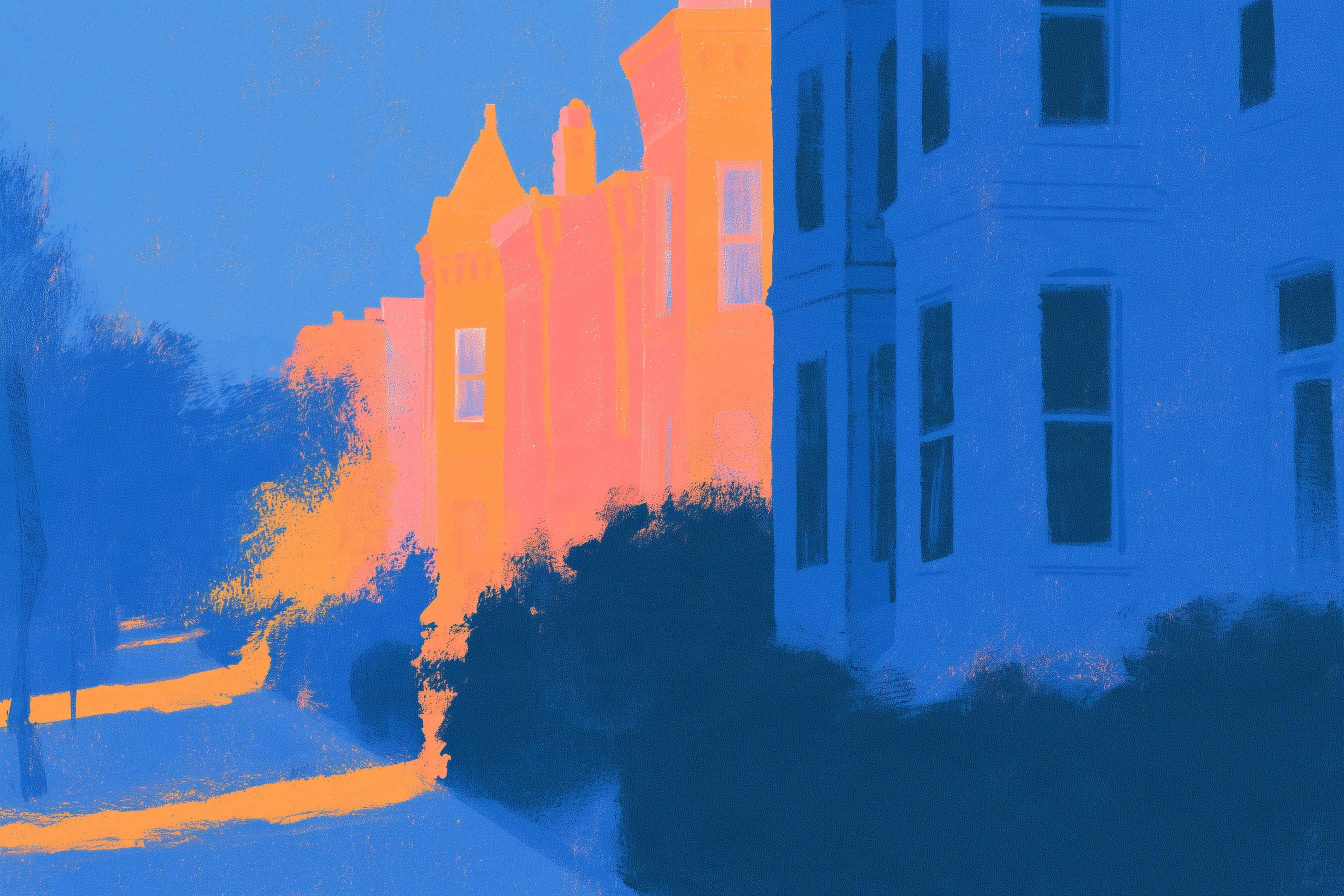
When my father was finally given custody of me, after years of bitter fighting between my parents, everything felt foreign. I was six years old when I moved into a Victorian brick row house in Northwest Washington, D.C., with him and my stepmother. During the 1960s, many working- and middle-class Black families lived tightly packed into these houses. Segregation had restricted where Black people could buy or rent, and many of the larger homes had been divided into apartments and boarding rooms to meet the demand. We rented the upper floor from an elderly couple who appeared almost white. There was only one bedroom, so I slept on the couch.
My stepmother was a short, heavy-set woman from rural North Carolina, and discipline began almost immediately. I was not allowed to drink anything while eating, only after the meal was finished. When I was told to do something, I had to do it at once. Being told twice meant a beating, and there were many beatings. One of the first I remember was over a piece of pork. Pork made me nauseous, and I secretly spat some of it into the garbage. My stepmother decided that I was spoiled. On that afternoon, she came to collect me from school carrying a long wooden switch and beat me the entire time, as we walked home. After that, I learned to swallow the fat whole and fight the urge to vomit, because vomiting would also bring punishment. I was being taught that listening to my body’s needs could bring me pain in more than one way, and that this was something I was expected to endure without protest.
My first Catholic school was entirely Black except for the nuns. The nuns were white, and even as a child I could see that they favoured the lighter-skinned children and those who came from what were considered better homes. I was neither. Because they were white and held authority over us, I was deathly afraid of them. Sometimes, if one of them simply looked in my direction, I would jump. I was not even told that the patron saint after whom the school was named was Black: St. Benedict the Moor.
Looking back, I understand that some of that fear came from what I had already experienced at Junior Village. My body had learned to expect danger from adults in authority. But there was also something my grandmother had once told me: that white people were demons and would steal your soul if you looked them in the eye. As a child, I took her literally. Between the institution, the nuns, and the warnings passed down through my family, whiteness became connected in my mind with judgment, punishment, and danger.
My father was a quiet, still man. He was half Native American, descended from Piscataway people from the Potomac region. He was also a hard worker. As the oldest of twelve children, he spent much of his life supporting not only his own family but also his younger brothers and sisters. He usually worked two jobs. His first was as a policeman, and his second was renovating houses, work that left the skin on his hands cracked and peeling. His world was deeply Catholic: daily prayers, weekly Mass, and confession every Friday. From the outside, it was a world of duty, sacrifice, respectability, and order. But he drew me into that world in more ways than one. At night, after my stepmother had gone to sleep, he would come to the couch and fondle me. At first, I did not understand what he was doing. I only knew that it felt uncomfortable and wrong. When I was six, I was taken to the hospital because I was bleeding vaginally. When my stepmother asked what had happened, my father told her that I had hurt myself on the playground. She accepted his explanation and asked no more questions. Looking back now, I believe she knew that something was wrong but did not want to risk the financial security he provided for her and her children. At the time, I only understood that no one was going to protect me. As the abuse continued, I learned how to leave myself. When his rough, cracked hands touched me, I became blank. I found another version of myself who could disappear until it was over. Between the beatings and the sexual abuse, fear became the rhythm of the house. By the age of eleven, I ran away.
I went to my mother, but her life had become even more unstable. She was rarely sober and could be aggressive, although she never beat me. Sometimes she would leave and not return for several days. This left me even more afraid and alone, never knowing whether she would return. There were also break-ins. One in particular left me traumatised: a man broke in three times, and on the last occasion stood over me, mocking me. I gathered all of my courage and threw a fishbowl at him, which made him run and not return. I moved back and forth between her home, Junior Village, foster homes, and group homes. I became one of the repeaters again, returning to the place where I already knew the rules of survival.
During those years, I spent a great deal of time entering street-dance competitions. I competed fiercely and fought hard to win. Dance gave me a place where my body belonged to me. On the street and in competition, I could turn fear into movement, anger into rhythm, and survival into something other people applauded. Towards the end of my competitions, I became one of the best in my hometown.
When I was fourteen, exhausted by instability and rejection, I returned to my father. By then, he had a house in Congress Heights, Southeast Washington, in an all-Black neighbourhood. The house was crowded with three siblings, another child on the way, and two of my father’s youngest sisters. My stepmother ran the household with the discipline of an army barracks, and I was placed back into Catholic school. My father’s old habits returned. He often took me in the car to the wharf to buy fish and crabs for the family. On the way, he would stop somewhere and sexually abuse me. His coarse rough hands leaving me bruised and speechless. By then, I understood what was happening, but I also understood that I was not supposed to tell anyone. I believed that speaking would cost me everything I had left, including my sanity. The abuse continued for another year and a half before I ran away again, this time for good. I spent the following year between Junior Village and a correctional centre after being arrested for stealing. I had already learned that children who were hurt were often punished for the ways they learned to survive.
Then one day, while passing a group of street-theatre performers, I stopped to watch. I was fascinated. They were using their bodies, voices, movement, and stories to hold the attention of strangers. For the first time, I saw performance not only as escape, but as possibility. That was the moment my life began to change. Not long afterwards, I auditioned for the Workshop for Careers in the Arts and was one of fifteen young people chosen from around 300 teenagers for the drama department. The street-theatre performers had come from there. For the first time in my life, I entered a place where my intensity was not treated as a problem to be controlled. My anger, my fear, my movement, my voice, and the strength I had developed in order to survive were recognised as material that could be shaped into something creative. Many of our teachers were respected performers connected to Howard University. They helped to create the renowned D.C. Repertory Theater Company and became the first Black artistic role models I had ever known closely. Until then, Blackness had so often been presented to me as something that placed me at a disadvantage, something that had to be disciplined, contained, or overcome. In the workshop, I began to understand it as a gift. The way we moved, spoke, told stories, made music, and carried history in our bodies was not a hindrance to art. It was part of the source.
My teachers gave me people to look up to and a different way of seeing myself. They did not ask me to become smaller, quieter, or more acceptable. They taught me how to take the fear and anger I carried and channel them into something distinctly creative. They gave me skills, but they also gave me discipline: how to rehearse, how to listen, how to use my body and voice with intention, and how to return to the work even when I was tired, wounded, or afraid. They also changed my understanding of homosexuality. My mother’s sexuality had been surrounded by poverty, alcoholism, shame, mockery, and social judgment, and as a child I had learned to connect those things with one another. At the workshop, many of my teachers were gay, and they showed me something entirely different. Their homosexuality was not dirty, threatening, or tragic. It was simply part of who they were. They were talented, demanding, generous, funny, disciplined, and fully alive. Through them, I began to separate love and identity from the shame that society had attached to both.
The workshop taught me that art could do more than help me escape. It could give shape to what had happened to me. It could turn pain into language, rage into movement, and fear into presence. It taught me how to fight for myself and for people who were oppressed without surrendering dignity, courage, or imagination. Those teachers did not erase what had happened to me, but they gave me another inheritance. They gave me craft, discipline, positive role models, and a Black creative world in which I could begin to recognize myself as a valuable, authentic person. What started as a moment of fascination on a street corner became the direction of my life.