What You Don't Expect from Me – Opening Excerpt



Excerpt from "What You Don't Expect from Me" (Trident Press, 2024)
Translated by Nathaniel Kennon Perkins
Set against the backdrop of Argentina's economic and social crisis, What You Don't Expect From Me follows the teenage son of a political front man used to conceal illicit wealth, who secretly publishes his personal and family life online under a fake identity. Trapped inside the artificial safety of a gated community and accompanied by punk and rock music, he turns the internet into a weapon against silence. Blurring the boundaries between realism, autofiction, and fabrication, the novel explores class privilege, virtual life, bullying, sexual awakening, toxic relationships, and, above all, an introverted teenager's desperate search for freedom.
I don’t want to be here, dealing with myself. I want to rip off my own head, hold it by the hair, and empty it out. Let my eyes go blank. Since I was a kid, people have told me to let things go. As though they saw me dragging a backpack full of rocks. But the real problem is who I am inside. The inner me.
“Moving out of your comfort zone can be extremely traumatic,” my psychologist told me. “It’s time for you to try to find yourself in the place where you are now.” Then she told me that we would use a new treatment method in order to navigate this latest life change: “We need you to unload everything you’re holding inside you. Writing can help a lot.”
“But what do I write?” I asked.
“What you’re feeling.”
“Most of the time I don’t know what I’m feeling.”
“Okay. Well, write what you feel, and when you don’t know what you feel, describe what’s happening to you, daily occurrences, things you remember from your childhood, everything. Unload,” she told me, again.
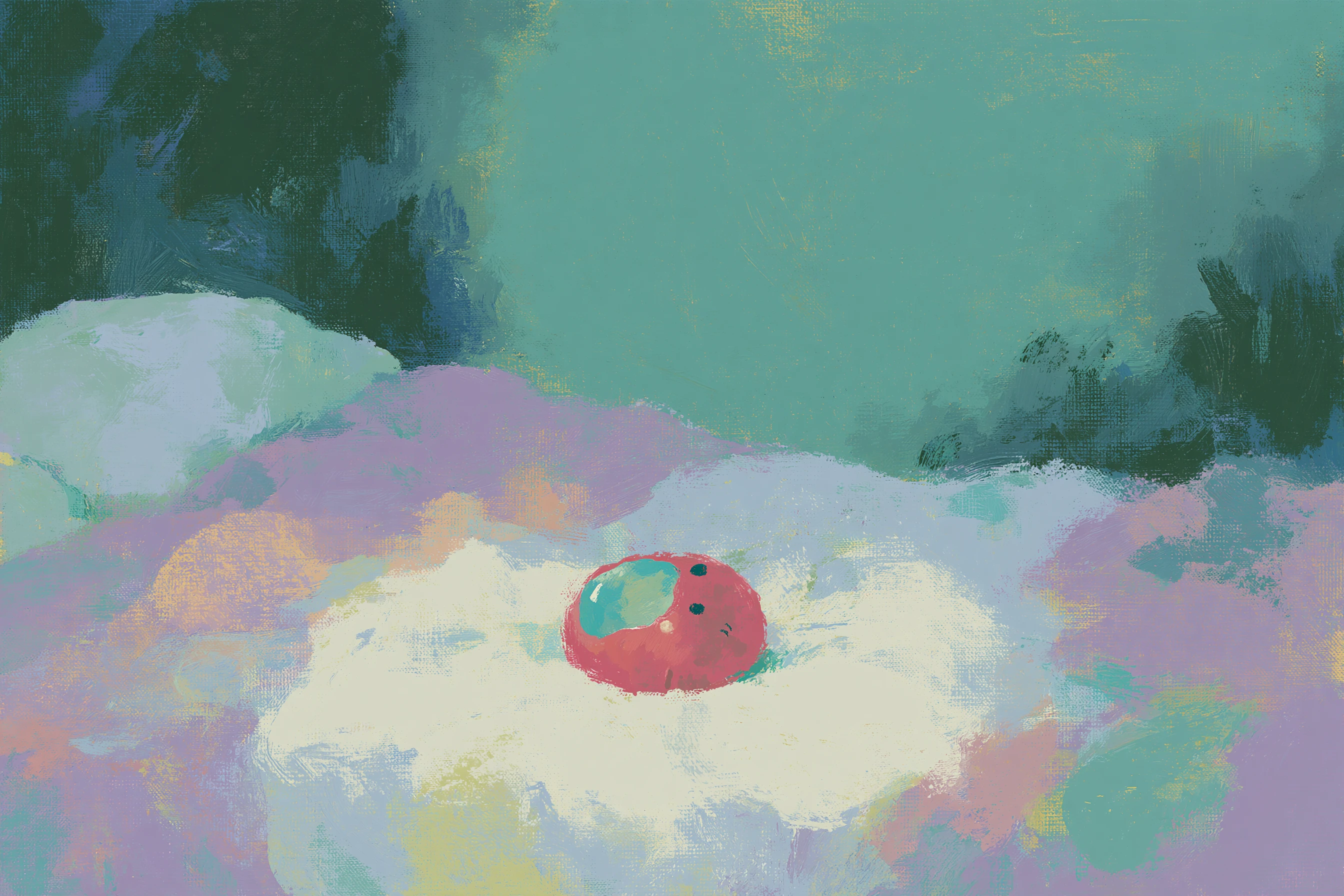
Sitting on the parquet floor of my new bedroom, I opened one of the boxes. I was sure Lourdes had packed it, because it contained my old red tamagotchi. Screen blank. Dead. The kind of gift you got a child to stop him crying. Now that I’m thinking about it, when I was seven, the tamagotchi was my first friend. I recently heard that some Japanese kids had killed themselves because their tamagotchis died. I’d had another sort of problem as a kid: I cried because I thought I’d never learn how to read. My classmates all knew how, but I couldn’t do it. I’d take a section from the newspaper to my room and, without knowing how to put letters together or form words, I’d “read” it. I was convinced that if I imitated the posture my dad took to read during breakfast I would learn.
While shaking my dying tamagotchi in frustration, I’d suddenly started doing it—I don’t remember how—putting syllables together, fascinated that suddenly I could read everything. I started reading street signs when we walked or drove, the flyers that arrived at the house or that people handed us on the sidewalk. Anything. I didn’t stop for a second. At first, I read out loud, but then my mom told me I should read silently, in my head, and she gave me the instruction manuals for our kitchen appliances so I’d shut up. I can’t blame her. I had ants in my pants. I was unbearable. I talked all the time and to everyone. I might bring up any topic at any moment. I didn’t understand the concepts of discretion or a family circle of trust. I was just little. I wasn’t doing it on purpose.
They gave me Ritalin, too, because I couldn’t pay attention in school. The blue ceramic kitchen tiles and my mom, still sober then, illuminated by the cold morning light, pretending my spoon was an airplane bringing a hidden load of cargo to my mouth. The school bus honking outside and her chasing me through the house. She’d catch me and squeeze my cheeks, saying, “Swallow! Swallow!” That’s how, in time, I quit talking, quit bothering people. Just quit.
I didn’t like school. It bored me. I didn’t fit in. There I was, alone and quiet. The perfect student. In Language class, my teacher was an old lady with dirty fingernails. She would tap them on the table. She had lipstick on her teeth. When she was tired, she’d ask us to write what we’d done over the weekend, and she’d always call on me to read. I made up picnic outings and soccer games with my dad, and sometimes I’d write about a yellow lab, illuminated by the sun’s shining rays, trotting toward me with a tennis ball in his mouth. Or I’d say that we walked through the Parque de la Costa amusement park hand in hand, but that the day out ended with a zombie attack. We’d all died. Even though I hadn’t exactly done what she’d asked, Mrs. Genoveva would praise me.
Acting like a little weirdo kept me isolated, but one day that came to an end. Every time the teacher turned to the blackboard, something would hit me on the back of the head. It started with balls of paper, then turned into little taps or sometimes a full open-handed slap. Once, I made the mistake of tattling to the principal, who then showed up in the classroom to give a speech about camaraderie and good manners. I ended up in the bathroom with a bloody nose, the gym teacher handing me cotton balls. I tasted blood for the first time, watching thin red threads circling down the drain of the sink. My blue sweater ended up with splotches of violet. The school called my parents a thousand times.
They had the bright idea to sign me up for taekwondo, which seemed like the perfect combination of exercise and harmonious movement. They must have thought it would help me learn to defend myself. The teacher was a kind of Jackie Chan army man who shouted orders in a heavy Chinese accent. Before class was over, he organized the final battles. The parents would have shown up by then, and some of them watched in terror. But it was also clear that they swelled with pride when their child landed an ap chagi and knocked their opponent to the ground. I didn’t want to be there, much less to fight. I let myself get punched and kicked in order to bring humiliation, class by class, upon my father, whose idea it had been in the first place. The car ride home was always silent.
At school, I was slow to defend myself until one particularly bad day when I stabbed Mario, who had the habit of spitting on me. I stuck a drawing compass into his hand. With the blackboard in the background, I saw Red’s face deform in surprise. I’d suddenly become a violent boy, but at least that was the end of taekwondo, and now the other kids respected me. The blood-spattered compass changed everything. It linked me to Mario and Red forever.
Now I’m older, and that’s all in the past. I cut off my head to pour out what was inside of it because, from one day to the next, we moved to the country club.
“New year, new house,” my mother said, smiling, as if she were acting in a television commercial. I’d had everything in my old neighborhood, and eventually I’d stopped wondering whether people came over because there was a pool and snacks or because they were my friends. Mostly, I’d had what I cared most about. I was near the guys and Naty.
Here, my room is my space. It’s bigger than my old one, and I haven’t left it since yesterday, when we got here. We don’t have internet yet, or cable, or anything, and living in the real world sucks. This isolation, with no escape into TV or cyberspace, is the headquarters where I liquify my anger, staring at the ceiling. I can’t sleep. Silence is anxiety. The line of light under the door and the sound of footsteps on the stairs make me uneasy. I curl into the fetal position, but it’s no use. Sleep won’t take me. I toss and turn, lying on one side, then the other, face down, face up, nothing. Maybe I miss the sound of the 146 bus’s rumbling engine outside my window at all hours of the day and night. I don’t know.
Outside, it’s like the houses have been set up in the middle of a golf course. Every once in a while, I can hear the sound of a motorcycle, a lawnmower, a pool filter kicking on. Downstairs, my mother, possessed by the spirit of the Führer, shouts orders, and I know Lourdes is running back and forth, cleaning everything. The moving crew is still bringing stuff in. I still haven’t opened most of my boxes.
I feel lonely. I thought that was just for old widows petting cats and sitting in armchairs, but it was happening to me, too. Before, in my old neighborhood, I’d either invite the guys over or go out to find them, and that was that. Surely nobody has the time to come all the way out here. Not even Naty. I miss her. It’s weird. Something is happening and I don’t know what. Or rather, nothing is happening. If I don’t call her, she doesn’t call me. I have the old lady syndrome: I need someone to contact me.
On one box was written “DON’T TOUCH. FRAGILE. CDS.” I unpacked it and found The Ramones’ Mondo Bizarro. I blasted the music, as if it might call the guys to me, but no. I just heard the contents of my head dripping onto the floor.